






Over 2,600 years ago, Prince Siddhartha was born in Lumbini Garden, India. Legend tells of miraculous phenomena during his birth, such as “nine dragons spraying water” and “bathing in a golden basin,” as celestial beings celebrated the arrival of the future Buddha. Today, this tradition continues. Every year around the eighth day of the fourth lunar month (near Mother’s Day), Fo Guang Shan temples worldwide hold Buddha Day celebrations to express gratitude to the Buddha, to mothers, and for the opportunity to encounter the Dharma in this lifetime.
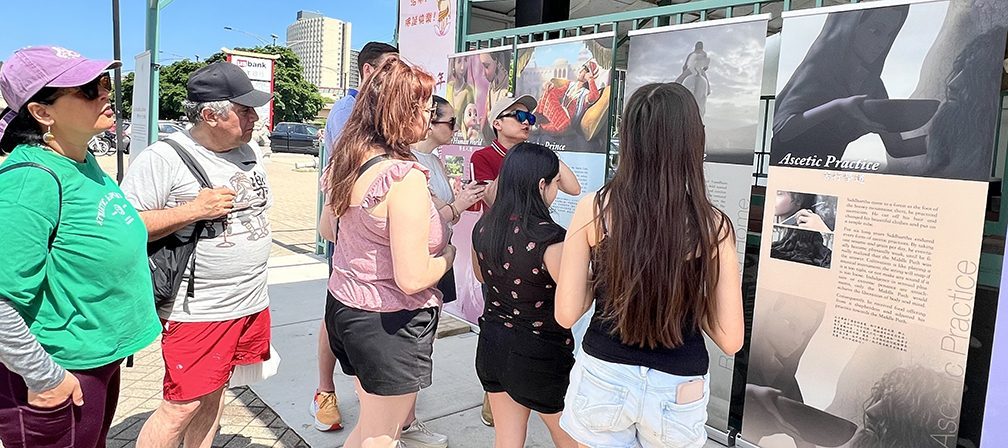
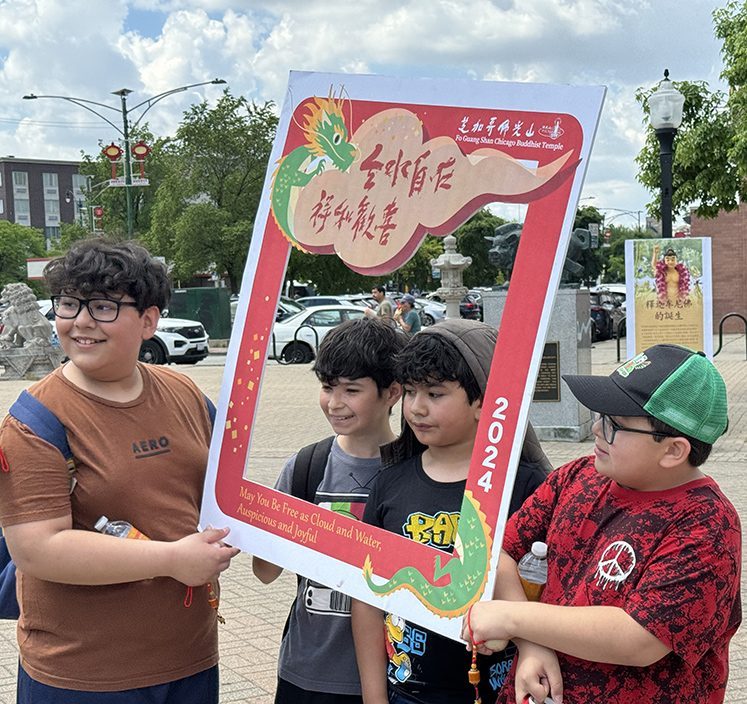
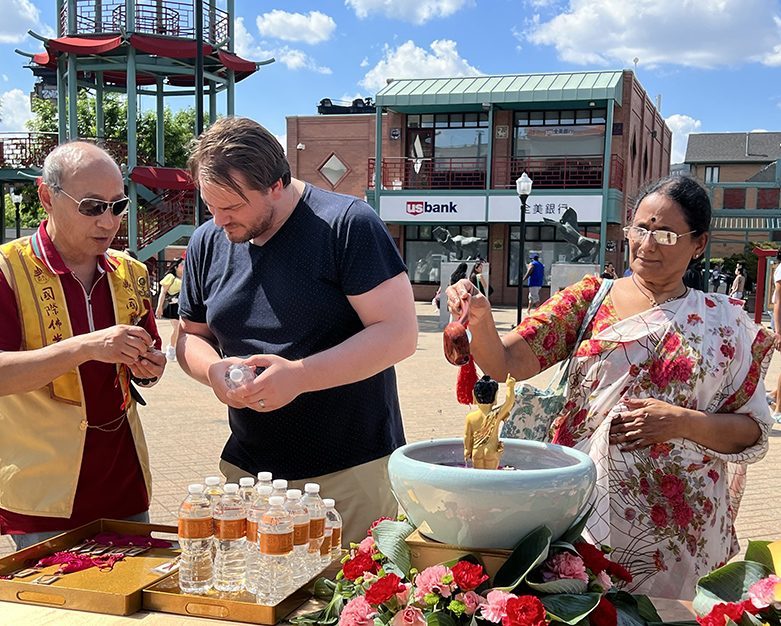
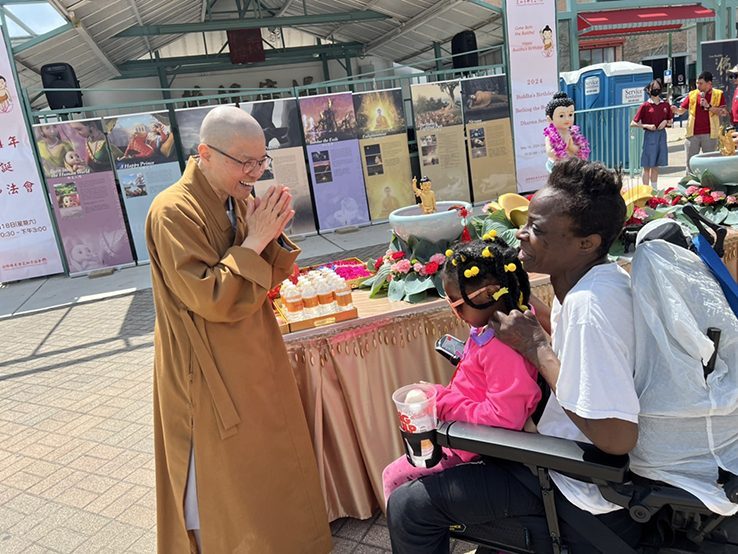
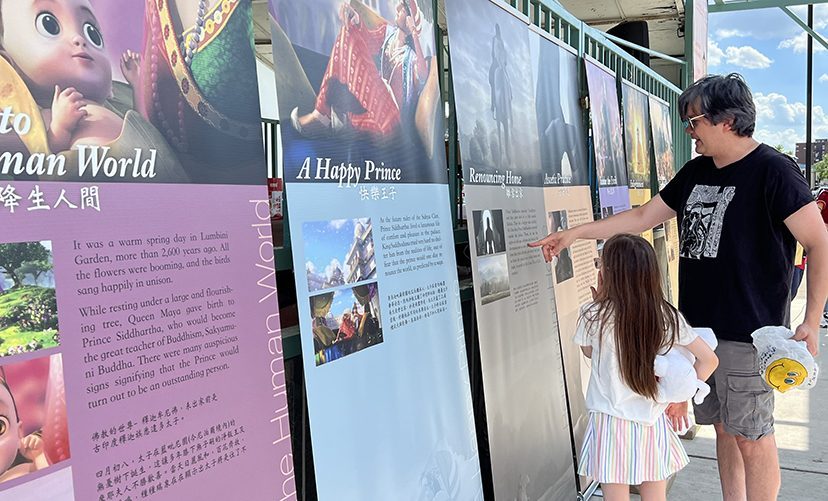
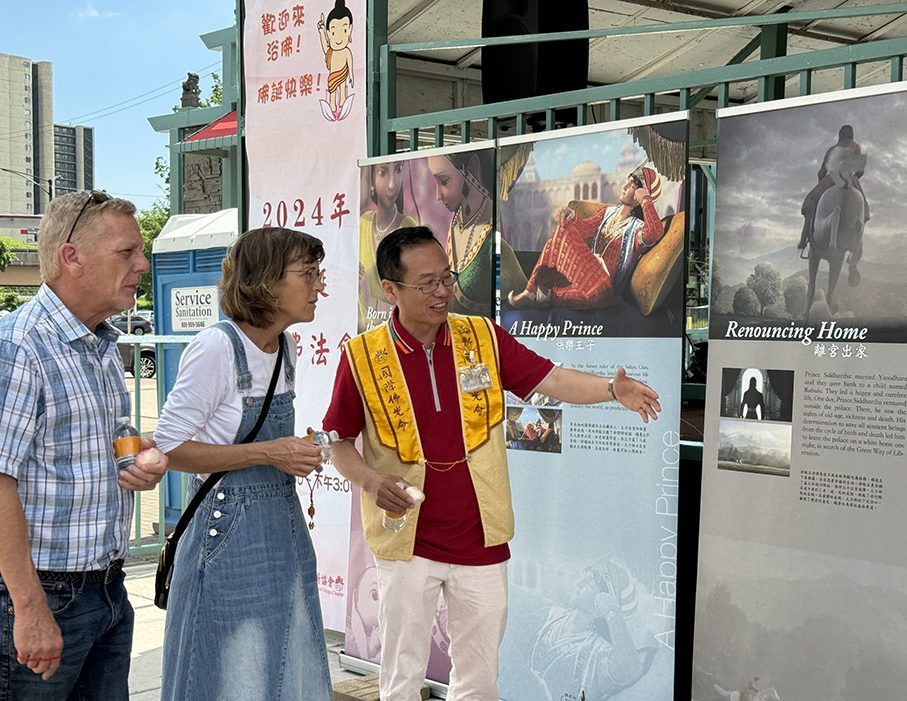
To celebrate Buddha Day this year, Fo Guang Shan Chicago organized a series of “Celebrating Buddha’s Birth and Repaying Parental Kindness” activities. A highlight was the “Cloud and Water Buddha Bathing” ceremony and “Life of the Buddha” special exhibition held at Chicago’s Chinatown Square on May 18. Under pleasant weather, the four-hour event attracted over 300 participants from diverse cultural backgrounds.
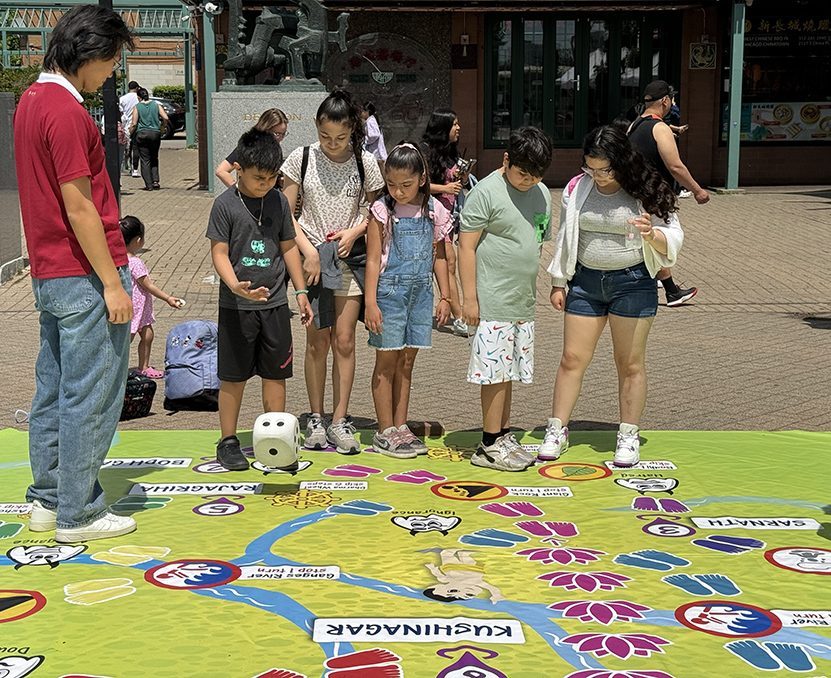
Early that morning, Head Priest Venerable Yung Han led volunteers in setting up the outdoor shrine, pitching tents, and organizing interactive stations. These included a “Where is the Buddha?” family game and a DIY station for rubbing the calligraphy of Venerable Master Hsing Yun, all designed to share the Dharma with the public.
Emulating Master Hsing Yun’s early propagation methods in Yilan, volunteers used a PA system to explain the significance of bathing the Buddha, drawing crowds from across the square. By midday, long lines had formed. In addition to local residents, travelers from across the U.S. and overseas tourists inquired in various languages about the meaning of the ceremony and the Buddha’s life story.
An Indian youth who had completed his master’s degree at Nanhua University in Taiwan expressed profound emotion at encountering Fo Guang Shan in Chicago and having the chance to bathe the Buddha again. Three devotees from Thailand performed traditional prostrations, while an American couple remarked on how much they enjoyed learning about Buddhist diversity through the exhibition, promising to visit the Chicago temple soon. A Vietnamese-Chinese participant was so moved that he called his entire family to join the ceremony.
The event was filled with bright smiles, whether participants were reverently bathing the infant Buddha statue, listening to volunteers explain the “Life of the Buddha” panels, or creating their own calligraphy rubbings. Many described the experience as an unexpected and rewarding encounter with the Buddha.
Chapter Superintendent Mai-Ping Chou noted the significance of intergenerational succession, as younger members like Hong-Wei Lin, Mei-Ying Deng, and Trudie Kanter provided bilingual explanations. Chicago YAD President Bin-Xin Wang and team members orchestrated games to teach the milestones of the Buddha’s life. “It is wonderful to see the younger generation taking charge while the elders provide support,” Chou remarked, “ensuring the Dharma will continue to be passed down.”
Chapter President Ke-Ying Wang and Subchapter Presidents Ying-Xue Liu and Piao-Jin Xu emphasized the importance of Humanistic Buddhism “walking into the crowd” to build bridges with the public. Volunteers, including the Xu sisters, Zhang Xiao-Hui, He Ting-Fang, and Wang Bin, worked tirelessly from dawn to dusk, moved by the focused and reverent expressions of those participating in the ceremony.
Through the collective efforts of the monastics and volunteers, this Buddha Day celebration reached the hearts of the public in Chinatown, leaving everyone with a sense of “Cloud and Water: Ease and Liberty; Harmony and Joy.”