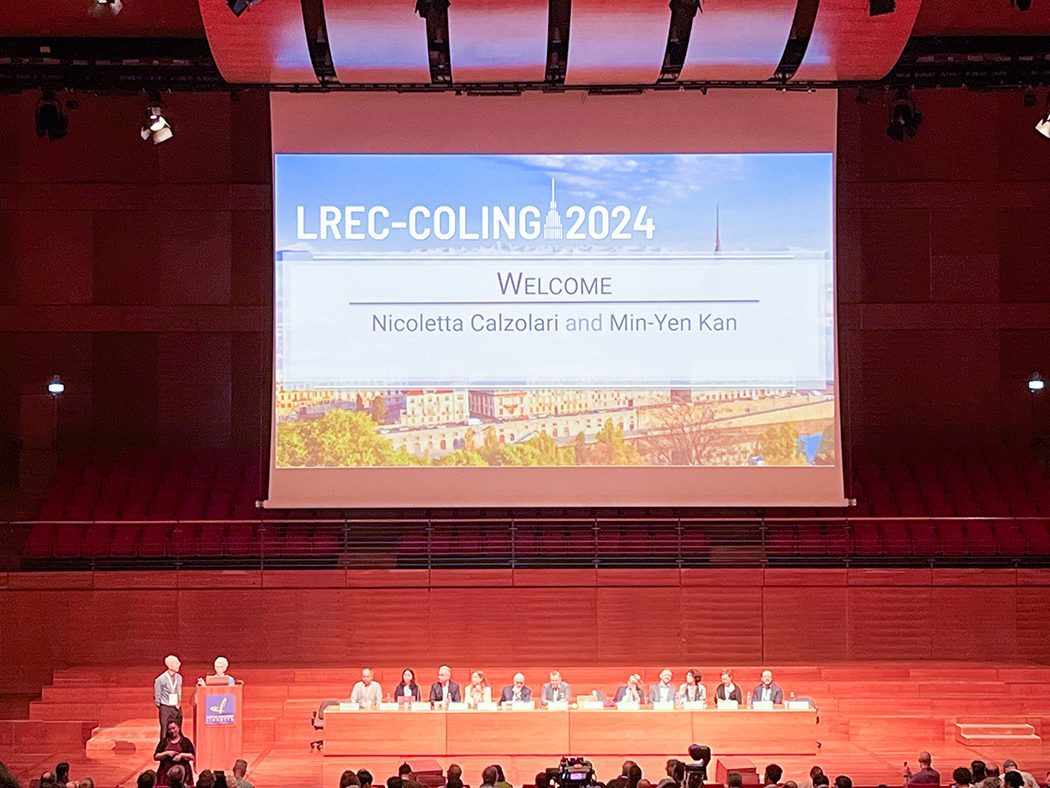


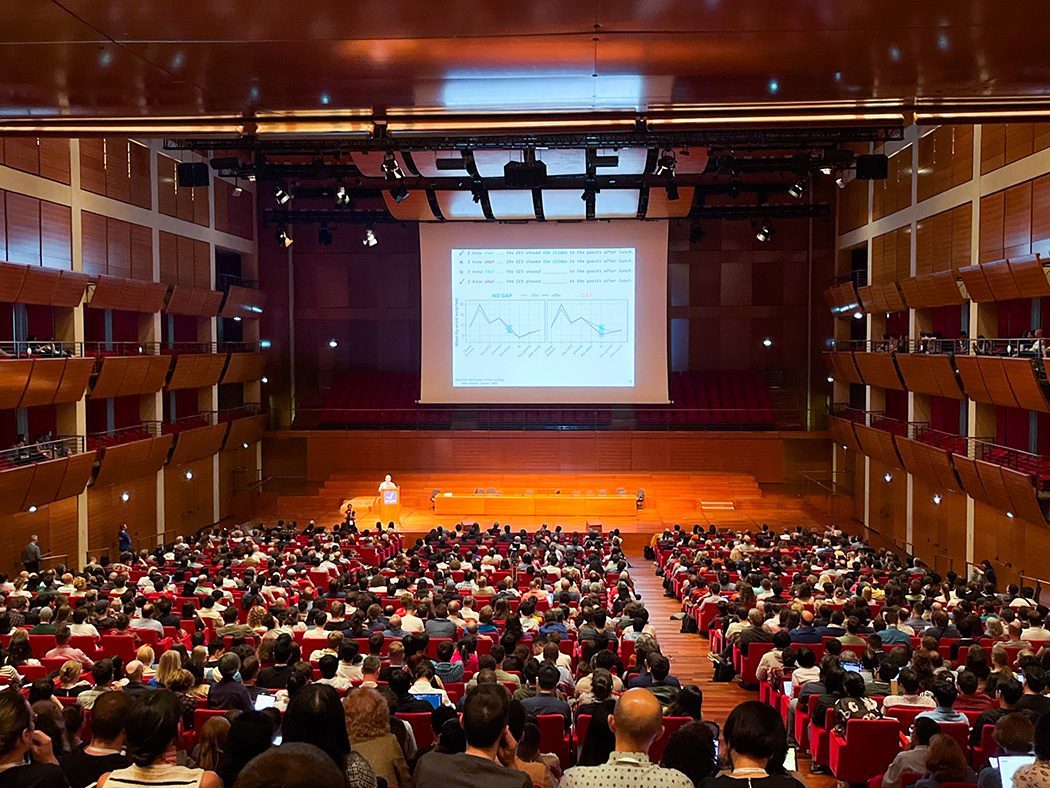

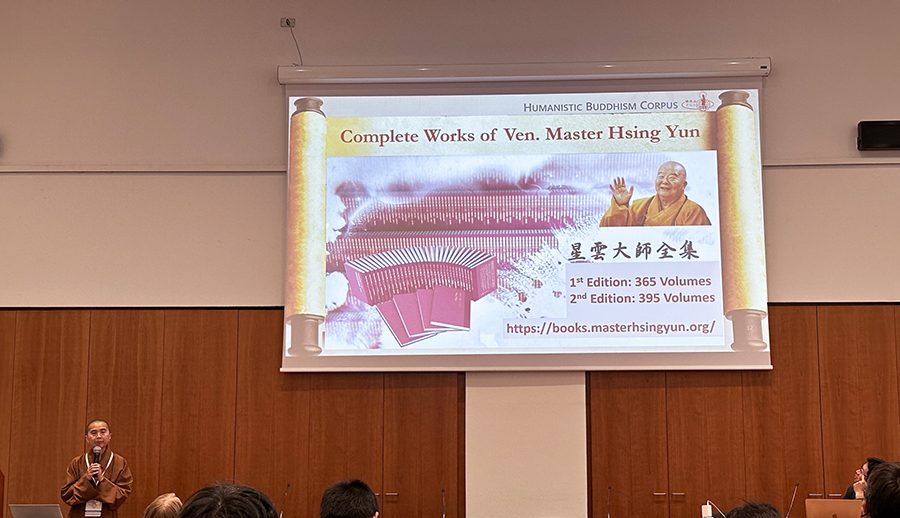
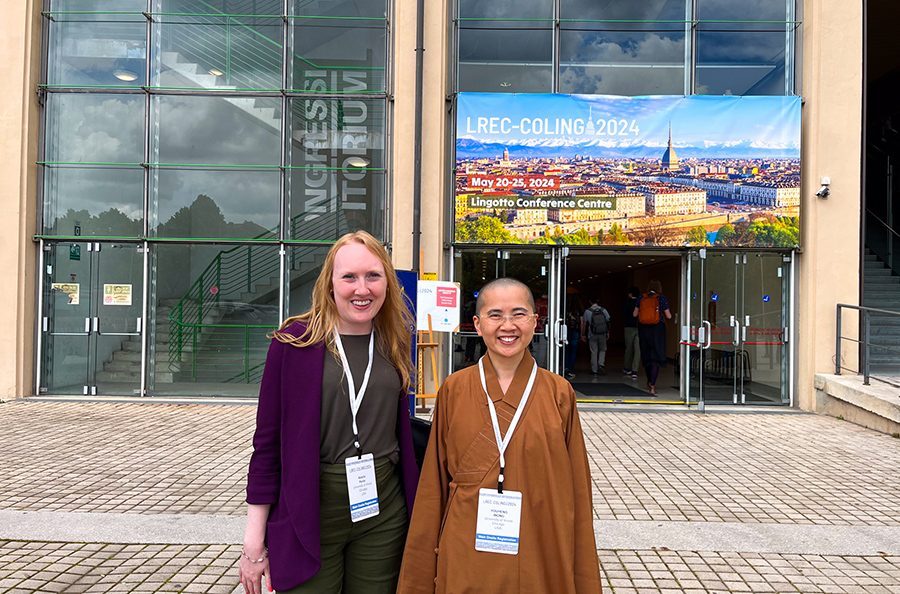


The 2024 Joint International Conference on Computational Linguistics, Language Resources and Evaluation (LREC-COLING), a premier academic gathering in the field, was held in Turin, Italy. Over 4,000 top researchers and scholars from 84 countries convened to discuss the latest advancements in Artificial Intelligence (AI) and Natural Language Processing (NLP). During the first session, Venerable You Heng of Fo Guang Shan presented her paper titled “Humanistic Buddhism Corpus,” introducing the “Complete Works of Venerable Master Hsing Yun” into the field of AI, which received an enthusiastic response.
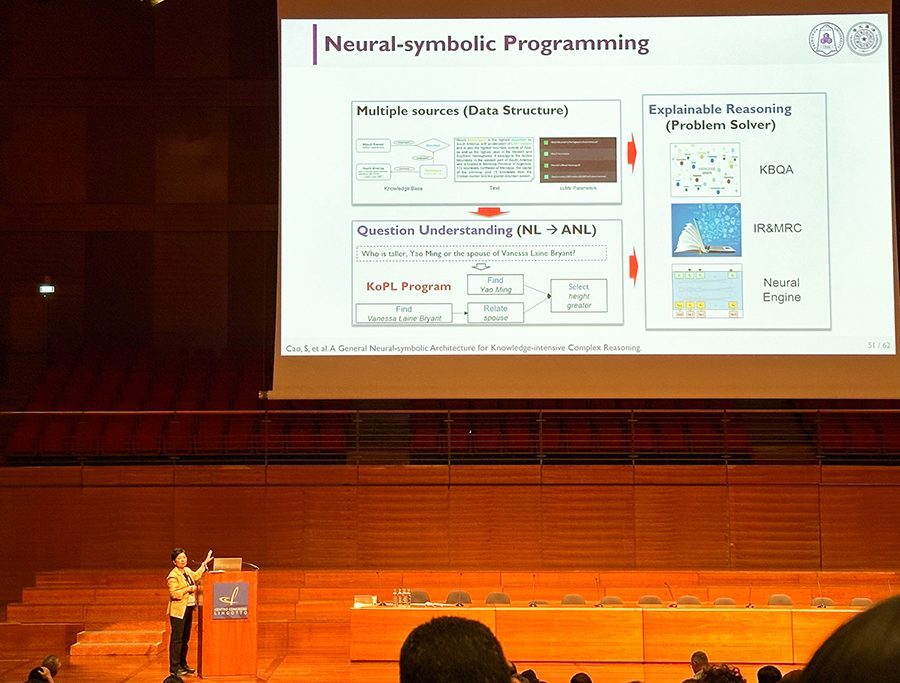
Since its inception in New York in 1965, COLING has become a significant event in computational linguistics. This 30th edition, held jointly with LREC, received 3,471 submissions, with 1,554 papers accepted. The conference featured 26 specialized tracks, including 275 oral presentations and 837 poster sessions. Keynote speakers included world-renowned experts such as Professor Roger Levy from MIT and Professor Juanzi Li from Tsinghua University.
Venerable You Heng, the Superintendent of Fo Guang Shan Chicago and a PhD candidate in Electrical and Computer Engineering at the University of Illinois Chicago (UIC), presented a rare religion-related paper: “Humanistic Buddhism Corpus: A Challenging Domain-Specific Dataset of Classical and Modern Chinese with English Translations.” As the lead author, she co-wrote the paper with her advisors, Professors Natalie Parde and Erdem Koyuncu. The Humanistic Buddhism Corpus is a high-quality, open-access dataset featuring complex linguistic models of both Classical and Modern Chinese, which can be widely applied to various professional domains. The study also utilized the Transformer model to establish baseline benchmarks for Neural Machine Translation (NMT).
The innovative contributions of the corpus impressed scholars from the University of Zurich, the University of Trento, and several UK institutions, who expressed interest in potential collaborations. The corpus contains 81,000 parallel Chinese-English sentence pairs, meticulously curated over two years by more than 20 dedicated BLIA volunteers, including Li-Chen Man, Hsu Chen-Jung, Li Hsing-Ming, Lin An-Hsi, and Hsu Hsiu-Luan. In addition to classic Buddhist sutras and verses by over 100 ancient scholars, the corpus centers on the works of FGS founder Venerable Master Hsing Yun. His 395-volume “Complete Works,” available for free online and widely translated into English, served as the primary inspiration for this groundbreaking research.
The LREC-COLING conference featured participation from prestigious universities like Oxford, Cambridge, Stanford, and Peking University, as well as tech giants like Google, Microsoft, Tencent, and Baidu. UIC had 11 papers accepted at the conference, with Professor Parde serving as a session chair. All accepted papers are published on aclanthology.org, and the “Humanistic Buddhism Corpus” paper can be accessed directly at: https://aclanthology.org/2024.lrec-main.737.The 2024 Joint International Conference on Computational Linguistics, Language Resources and Evaluation (LREC-COLING), a premier academic gathering in the field, was held in Turin, Italy. Over 4,000 top researchers and scholars from 84 countries convened to discuss the latest advancements in Artificial Intelligence (AI) and Natural Language Processing (NLP). During the first session, Venerable You Heng of Fo Guang Shan presented her paper titled “Humanistic Buddhism Corpus,” introducing the “Complete Works of Venerable Master Hsing Yun” into the field of AI, which received an enthusiastic response.
Since its inception in New York in 1965, COLING has become a significant event in computational linguistics. This 30th edition, held jointly with LREC, received 3,471 submissions, with 1,554 papers accepted. The conference featured 26 specialized tracks, including 275 oral presentations and 837 poster sessions. Keynote speakers included world-renowned experts such as Professor Roger Levy from MIT and Professor Juanzi Li from Tsinghua University.
Venerable You Heng, the Superintendent of Fo Guang Shan Chicago and a PhD candidate in Electrical and Computer Engineering at the University of Illinois Chicago (UIC), presented a rare religion-related paper: “Humanistic Buddhism Corpus: A Challenging Domain-Specific Dataset of Classical and Modern Chinese with English Translations.” As the lead author, she co-wrote the paper with her advisors, Professors Natalie Parde and Erdem Koyuncu. The Humanistic Buddhism Corpus is a high-quality, open-access dataset featuring complex linguistic models of both Classical and Modern Chinese, which can be widely applied to various professional domains. The study also utilized the Transformer model to establish baseline benchmarks for Neural Machine Translation (NMT).
The innovative contributions of the corpus impressed scholars from the University of Zurich, the University of Trento, and several UK institutions, who expressed interest in potential collaborations. The corpus contains 81,000 parallel Chinese-English sentence pairs, meticulously curated over two years by more than 20 dedicated BLIA volunteers, including Li-Chen Man, Hsu Chen-Jung, Li Hsing-Ming, Lin An-Hsi, and Hsu Hsiu-Luan. In addition to classic Buddhist sutras and verses by over 100 ancient scholars, the corpus centers on the works of FGS founder Venerable Master Hsing Yun. His 395-volume “Complete Works,” available for free online and widely translated into English, served as the primary inspiration for this groundbreaking research.
The LREC-COLING conference featured participation from prestigious universities like Oxford, Cambridge, Stanford, and Peking University, as well as tech giants like Google, Microsoft, Tencent, and Baidu. UIC had 11 papers accepted at the conference, with Professor Parde serving as a session chair. All accepted papers are published on aclanthology.org, and the “Humanistic Buddhism Corpus” paper can be accessed directly at: https://aclanthology.org/2024.lrec-main.737.