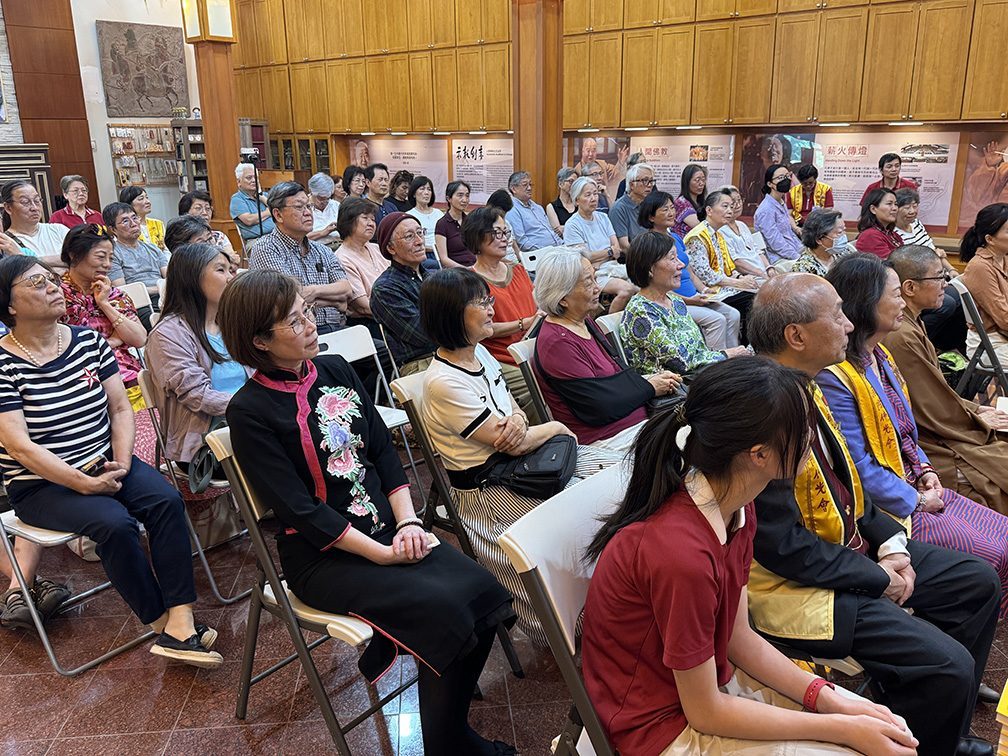


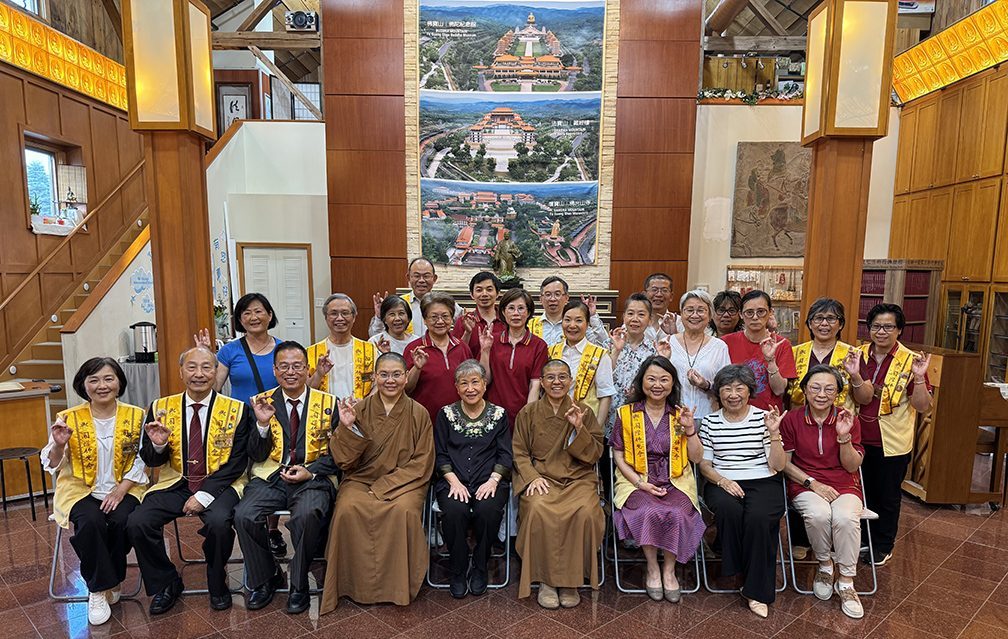
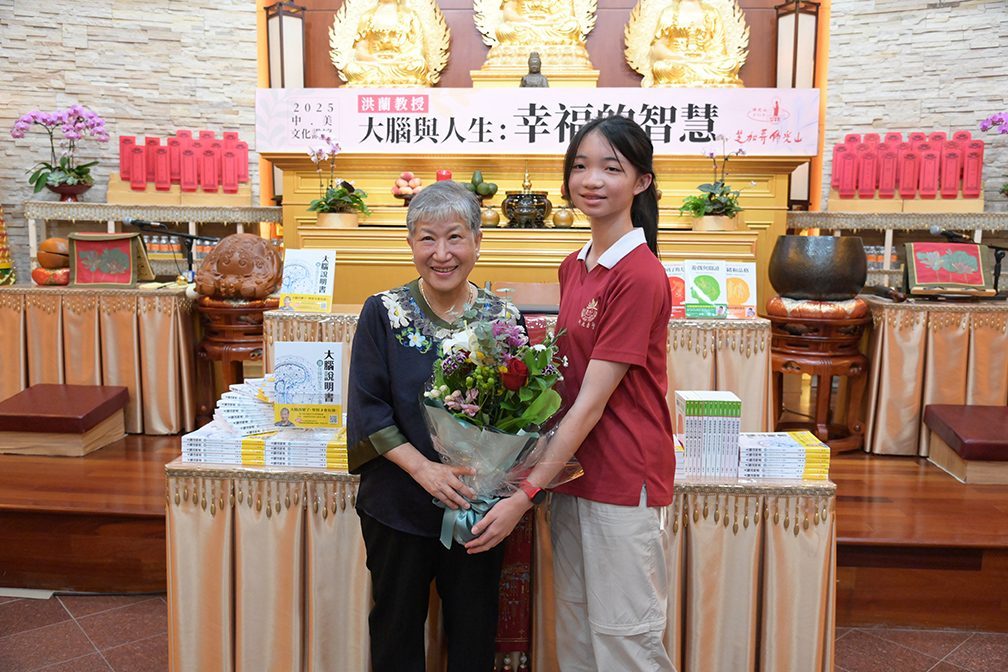

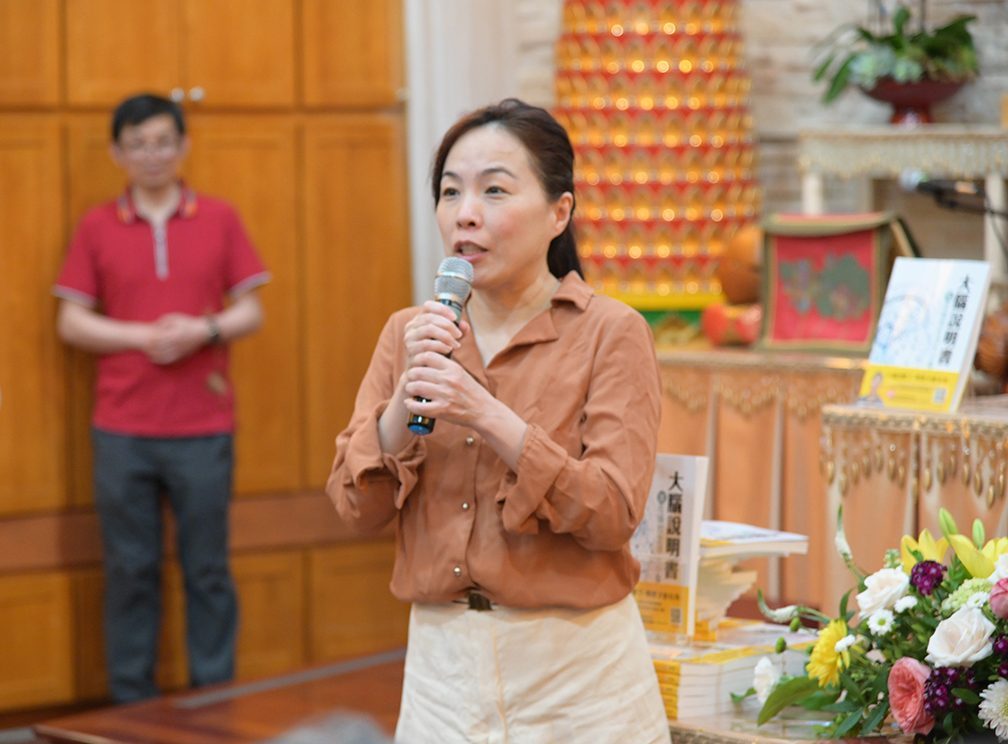

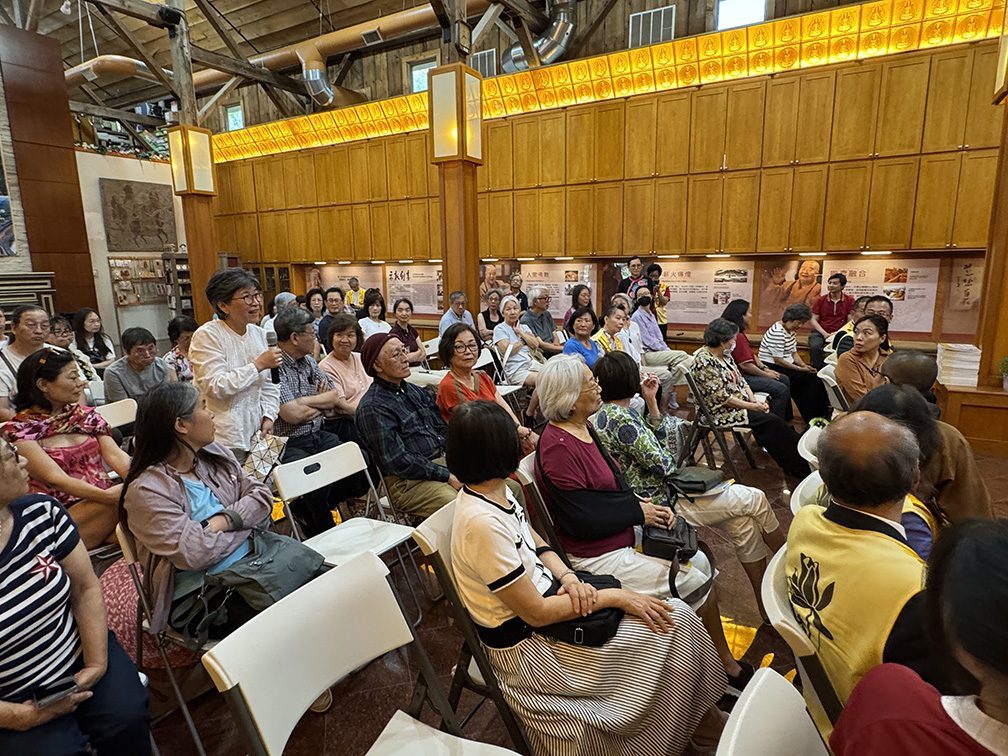


On June 22, Fo Guang Shan Chicago hosted a session of the “Fo Guang Shan Sino-American Cultural Forum North America Tour,” featuring renowned neuroscientist Professor Daisy Hung. Her lecture, titled “The Brain and Life: The Wisdom of Happiness,” was attended by Yi-Chen Chen, Deputy Director of the Culture Center of TECO in Chicago, and over 80 members of the local community.
Professor Hung used accessible language to blend neuroscience, Buddhist thought, and Eastern and Western philosophical perspectives to explain that “happiness is a state of mind.” She emphasized that happiness does not depend on how much one possesses, but on contentment and gratitude for the present. Quoting Ralph Waldo Emerson, she noted: “The happiest person is not the one who has everything, but the one who is most grateful for what they have.” She further explained that gratitude activates the brain’s reward system, thereby increasing the sense of well-being.
She further pointed out that the brain possesses “neuroplasticity,” meaning that neural structures can be reshaped through learning and experience even in adulthood. She encouraged lifelong learning, drawing inspiration from the spiritual practice of the Universal Worthy Bodhisattva’s Verse, and highlighted that active learning can reduce the risk of Alzheimer’s disease. Additionally, she used research cases to debunk the myth of “losing at the starting line,” noting that individuals can learn and live even with only half a brain. She stressed that with proper education, children should be allowed to grow from their mistakes without being pressured prematurely.
Regarding stress management, Professor Hung stated that stress is not entirely negative, as moderate stress can promote growth. She proposed three principles: assessing the source of stress, measuring one’s own capabilities, and making wise choices. Using the example that “smiling can reduce the pain of an injection,” she illustrated how positive emotions can regulate stress through physiological mechanisms, concluding that changing one’s mindset is changing one’s destiny.
The lecture concluded with a lively interactive session. Friend of FGS Di-Ren Lyu shared that the lecture brought new thinking and inspiration to education. Moses and Xiao-Yun Shang, Chairperson of the Chinatown Security Foundation and his spouse, also remarked that Professor Hung’s integration of scientific theory with life wisdom was humorous, profound, and thought-provoking.
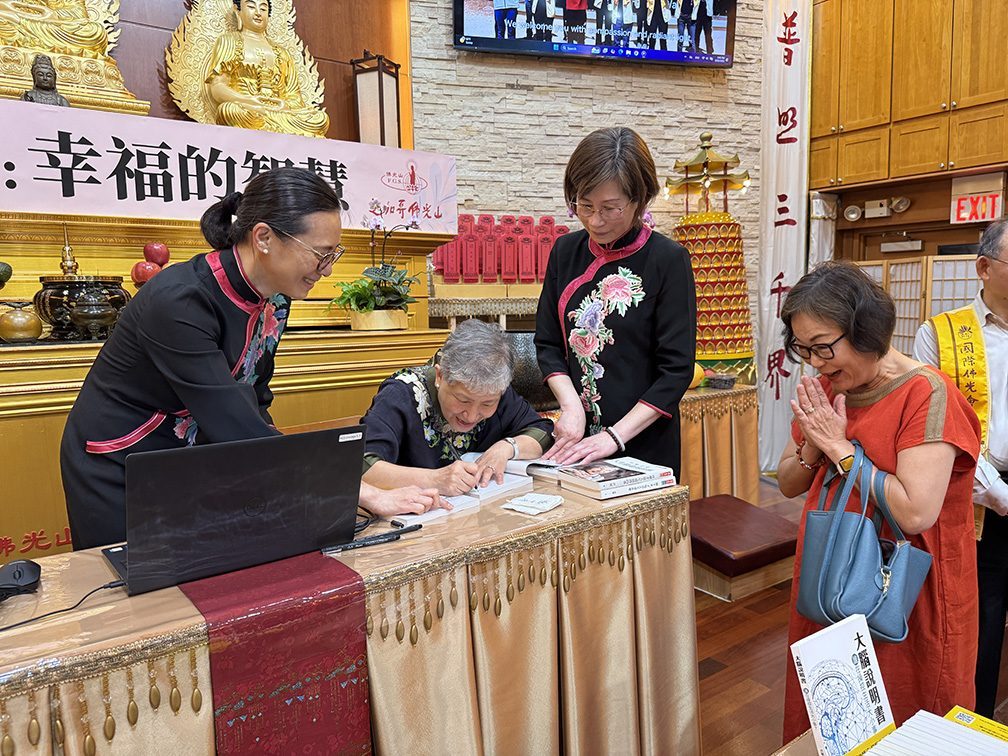
To conclude the event, YAD representative Zi-Xu Feng presented flowers to the speaker. Venerable Yung Han, Head Priest of Fo Guang Shan Chicago, presented a piece of “Heart Sutra” calligraphy by the FGS founder, Venerable Master Hsing Yun, and Chicago Chapter President Ke-Ying Wang presented a local specialty—Chicago popcorn—as a token of sincere appreciation. Participants left with signed books and group photos, returning home filled with wisdom and joy.